
Choosing the right launch platform is one of the most important strategic decisions a food brand will make. At XP Design, we often see founders rush toward well-known retailers without fully understanding how each platform evaluates products, measures performance, and decides which brands are approved.
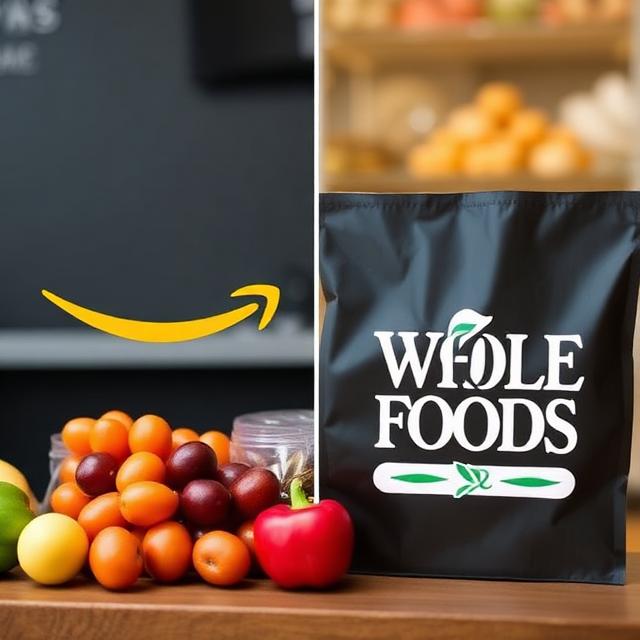
Two of the most common launch options are Amazon and Whole Foods Market — but despite their close relationship, they serve very different purposes in a food brand’s growth journey.
Understanding these differences early can prevent costly mistakes and accelerate long-term success.
Why Platform Choice Matters at Launch
Each platform rewards different behaviors. Launching on the wrong one can result in margin erosion, inventory losses, delayed approvals, or long-term positioning issues.
A successful launch is not about prestige — it is about choosing the platform that matches your current stage of readiness.
Amazon: Data-Driven Market Validation
For most food brands, Amazon is the most effective place to start.
Amazon is built to measure real consumer behavior at scale. It provides immediate feedback on whether a product can compete, convert, and sustain velocity in a competitive environment.
Amazon Is Ideal For:
Demand validation
Amazon search data shows whether consumers are actively looking for your product type, flavor, or benefit.Pricing experimentation
Brands can test price points, bundles, and pack sizes before locking in retail pricing.Review generation
Early reviews act as social proof and are often expected by retail buyers before considering a new product.Velocity proof
Amazon tracks consistency, not one-time spikes, making it a powerful validation tool.
Amazon rewards products that convert efficiently, ship reliably, stay compliant, and remain in stock. This makes it an excellent testing and optimization environment before committing to retail volume.
The Reality of Amazon’s Challenges
While Amazon offers valuable data, it is also unforgiving.
Food brands commonly struggle with:
Thin margins after advertising and fulfillment
Intense competition in commoditized categories
Rising ad costs during launch
Weak differentiation leading to price pressure
Amazon exposes operational and pricing weaknesses quickly. Products without margin discipline or clear positioning often fail before reaching scale.
That is why Amazon should be approached strategically — not emotionally.
Whole Foods Market: Brand & Compliance First
Whole Foods Market operates under a completely different evaluation model.
Whole Foods is not designed for experimentation. It is designed for curated, premium, and compliant brands that align with its ingredient standards and customer expectations.
Whole Foods Prioritizes:
Ingredient integrity
Clean formulations, transparent sourcing, and adherence to strict ingredient standards.Clean labeling
Accurate Nutrition Facts, defensible claims, and regulatory compliance.Brand story
Clear differentiation, mission, and value proposition beyond price.Supply chain reliability
Confidence that the brand can meet demand consistently and at scale.
Whole Foods protects shelf space aggressively and avoids brands that are not operationally or strategically ready.
What Whole Foods Buyers Expect to See
Before approving a product, Whole Foods buyers typically look for:
Strong compliance history
Clear category differentiation
Proof of demand (often from Amazon or DTC)
Stable pricing and margins
Scalable production capacity
In many cases, Amazon performance strengthens a Whole Foods pitch rather than replacing it.
Amazon and Whole Foods Serve Different Roles
A common mistake is treating Amazon and Whole Foods as competing launch options.
In reality:
Amazon validates market demand
Whole Foods validates brand credibility
When approached in the correct sequence, they reinforce each other instead of creating risk.
XP Design’s Platform Recommendation
In most cases, XP Design recommends the following launch sequence:
Step One: Amazon
Validate demand
Optimize pricing
Build reviews
Prove velocity
Identify operational gaps
Step Two: Whole Foods Market
Leverage performance data
Present a refined brand story
Demonstrate compliance readiness
Position as a premium, proven product
This approach increases approval probability while protecting margins.
The Risk of Starting on the Wrong Platform
Starting with Whole Foods too early often leads to buyer rejection, costly packaging revisions, or reformulation requirements.
Starting on Amazon without margin planning often results in excessive ad spend, pricing instability, inventory losses, or stalled rankings.
Both scenarios are avoidable with proper platform sequencing.
How XP Design Helps Brands Decide
At XP Design, we evaluate:
Category behavior
Margin durability
Compliance readiness
Competitive positioning
Long-term retail goals
Based on this analysis, we build a platform launch roadmap — not a one-size-fits-all answer.
Our goal is not to launch everywhere quickly, but to launch profitably and sustainably.
Final Thought
Launching a food brand is not about choosing the biggest name first.
It is about choosing the platform that supports your current readiness and prepares you for future growth.
Amazon and Whole Foods Market serve different purposes — and when used in the right order, they create leverage instead of risk.
XP Design helps food brands make these decisions strategically, using data instead of assumptions.